
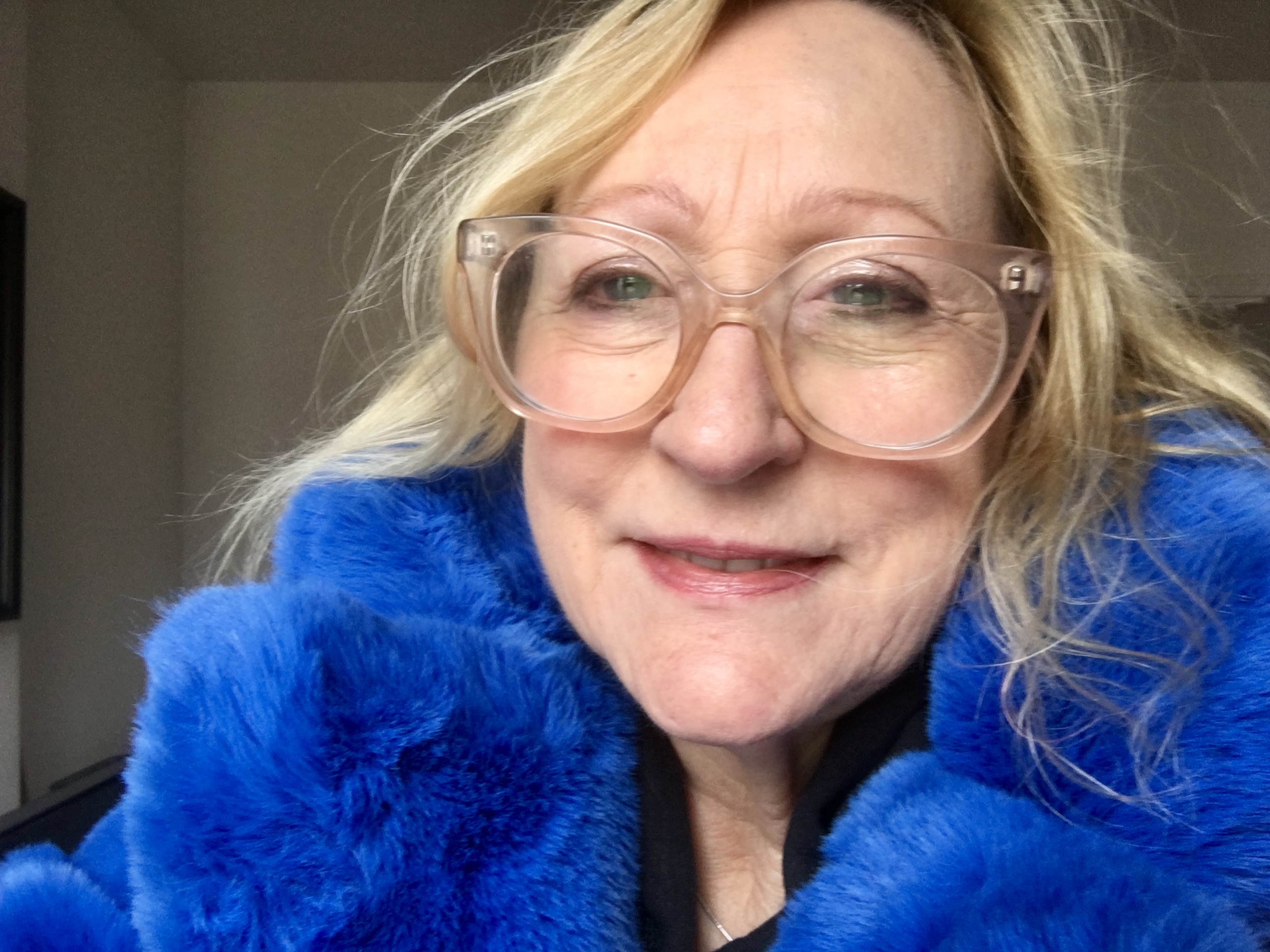
Making My Peace … with power dressing
Power clothes and power dressing have not been a feature of my style, but I’ve been thinking lately that there might be benefits in donning clothes that make me feel confident, and yes, even a little powerful. Admittedly, even the concept of what constitutes ‘power dressing’ has changed since the phrase was coined in the 1980s. Tailored trousers, double-breasted jackets, three-piece suits, expensive shoes, dark sunglasses … it is what you imagine it to be.
The thought arose while I was writing a review of Le Chapeau de Mitterand, a 2012 novel by French author Antoine Laurain, released in English in 2013 under the title The President’s Hat. The fictional story begins in Paris in November 1986.
Accountant Daniel Mercier is at the train station to greet his wife and son who have been on holiday in Normandy. Mercier is wearing President Francois Mitterand’s black felt Homburg hat.
The day before, he was at a restaurant and the president sat at the table next to him. When the president left, he forgot his hat. Instead of trying to return it, Francois Mercier stole it.
The hat turns the quiet Mercier into a more confident man. Even his work colleagues notice his ‘calm demeanour, air of assurance, the extraordinary way he had of saying the unpalatable with the utmost tact … true class!’
Wearing the hat, touching the hat, and even having it close to him gives Daniel Mercier a feeling of authority and ‘immunity to the torments of everyday, life.’ It sharpens his mind and gives him the ability to make important decisions.
But one day, he accidentally leaves the hat on the train. Fanny Marquant, a secretary in a regional tax office, boards the train. She is on her way to Paris for her regular meeting with a married man. It is raining and she sees the hat. Inside the hat are the initials F.M. – her initials. She wears it with her denim mini-skirt, high heels, and silver jacket. Wearing the hat makes her feel powerful, with an air of distinction.
Grey-bearded 52-year-old perfumier Pierre Aslan sees a black felt hat on a park bench. He is on his way to see his psychotherapist who is treating his depression. The smell of the hat is familiar – in fact, he can discern two scents. One scent is a man’s after-shave, and the other is a woman’s perfume: the perfume Pierre created eight years before.
Bernard Lavalliere is at a restaurant with his friends, where they argue about Francois Mitterand and politics. The cloakroom attendant gives him the wrong hat. If it weren’t for the hat, he would never have spoken to his neighbour and accepted an invitation to an art gallery exhibition. But one morning, as he is buying his daily newspaper, the hat is stolen right off his head.
Each story links the characters together through the president’s hat. And each person feels changed – in a positive way – just by wearing the hat; this hat; the president’s hat. ‘It had the power of destiny’ and each person’s destiny was changed – forever, and for the better.
Most of the characters don`t know that the hat belonged to a president. So, what is so special about the hat? Is it possible for an individual to undergo a personal transformation, temporarily or permanently, that changes their fate and fortune, just because they wear a hat! Or a scarf, or a favourite pair of socks, or a power suit? Is that probable, or even possible?
Do police officers feel more powerful when they wear their uniform? Do scientists feel more alert investigative wearing a white lab coat? Do artists feel more creative when they wear their smock? Or is this superficial silliness?
Many people do argue that there is definitely power in clothes. Investing in yourself, deliberately, each morning as you dress, sets the intention for the day. Colour, style, a special individual piece, an added necklace, a loved pair of shoes – it does make a difference to mood and mindfulness. Clothes are a form of communication – they silently say something.
Many articles in the journal Social Psychology and Personality Science support the power of clothes – formal clothes, power clothes, uniforms, cultural clothes, clothes that conform to a social group, and clothes with ‘‘personality.’
American psychology researchers at California State University, Columbia University, the California School of Professional Psychology, and the University of Iowa, in their 2015 study “The Cognitive Consequences of Formal Clothing” found that the clothing impacted a person’s thought processes. Wearing formal clothing increased a person’s abstract and independent thinking – the process is called ‘enclothed cognition.’ But often the results were defined by whether the person undertaking the experiment wore formal clothing often or whether it was a novel, or rare, experience for them. Then came the replication scandal, calling into question science experiments that produced different results when researchers replicated the same experiment. Another issue too was that the sampling size – the number of people in the experiments – was often far too few.
Recent 2023 research published by the British Psychology Society showed that research after 2016 improved significantly and that the core idea of ‘enclothed cognition’ is generally valid.
A 2021 South African study published in the Journal of Business and Retail Management by the University of Johannesburg looked at workforce women aged 20-35 years and found that clothing and fashion can help women with disabilities deal with issues related to low self-esteem and body image. Their article “Role of fashion as a form of therapy among women with disabilities in South Africa” showed that ‘dressing up’ – in formal wear at work – increased their body image, confidence, self-esteem, mental health, the way they perceived themselves, and changed the way others perceived them – in a positive way – which in turn boosted their own confidence even more.
The term ‘enclothed cognition’ (what you wear affects the way you think) used widely from 2012 to the present day is gradually being replaced with the term ‘Dopamine dressing’ (what you wear affects the way you feel). Some people attach bold colours to an increase in feeling good and confidence, while others go back to black. Some put on a higher heel, while others boot it. Putting on a tie in the workplace evokes added professionalism and a more focused decision-making approach for some, while adding a jacket jacks up a feeling of refinement and elegance.
Dress, trousers, outfit. It’s all personal. As Rachel Roy said, “A great dress can make you remember what is beautiful about life.”
Making my peace with power dressing, I learned the following:
- Outer wear and under wear are both good to feel good
- Trying clothes on is part of the ‘feel-good’ process
- Own your look and strut your stuff
- Red and yellow catch a fellow
- Blue and green should be seen, even with yellow in between
- If you love Barbie pink, wear Barbie pink!
- Jazz it up with a touch of pizazz
- Sequins is not a dirty word
- Silver and gold at the same time is just fine
- Pad up your shoulders and strike a pose!
- Life’s too short to wear scratchy clothes
- Rustle that bustle, but not squeaky creaky parkas
- If it works for you, it’s for you
Martina Nicolls: Rainy Day Healing – MAKING MY PEACE


Leave a Reply