
MAKING MY PEACE … with the labyrinth of contemplation
… finding stillness on the spiral Labyrinth Hill …
Labyrinths have existed for thousands of years across many cultures, from stone pathways in ancient Crete to the medieval floor maze at Chartres Cathedral in France, about 80 kms (50 miles) southwest of Paris. Unlike mazes, which are designed to confuse or challenge, labyrinths are paths of purpose: there’s one way in, one way out, and no tricks or dead ends. The journey is the point.
In garden design, the spiral or hedge labyrinth became popular, not only for its beauty, but also for emotional reflection. Walking slowly, quietly, step-by-step, the movement calms the mind, lowers the heart rate, and opens the thoughts to insight. There is no rush. There are no shortcuts.
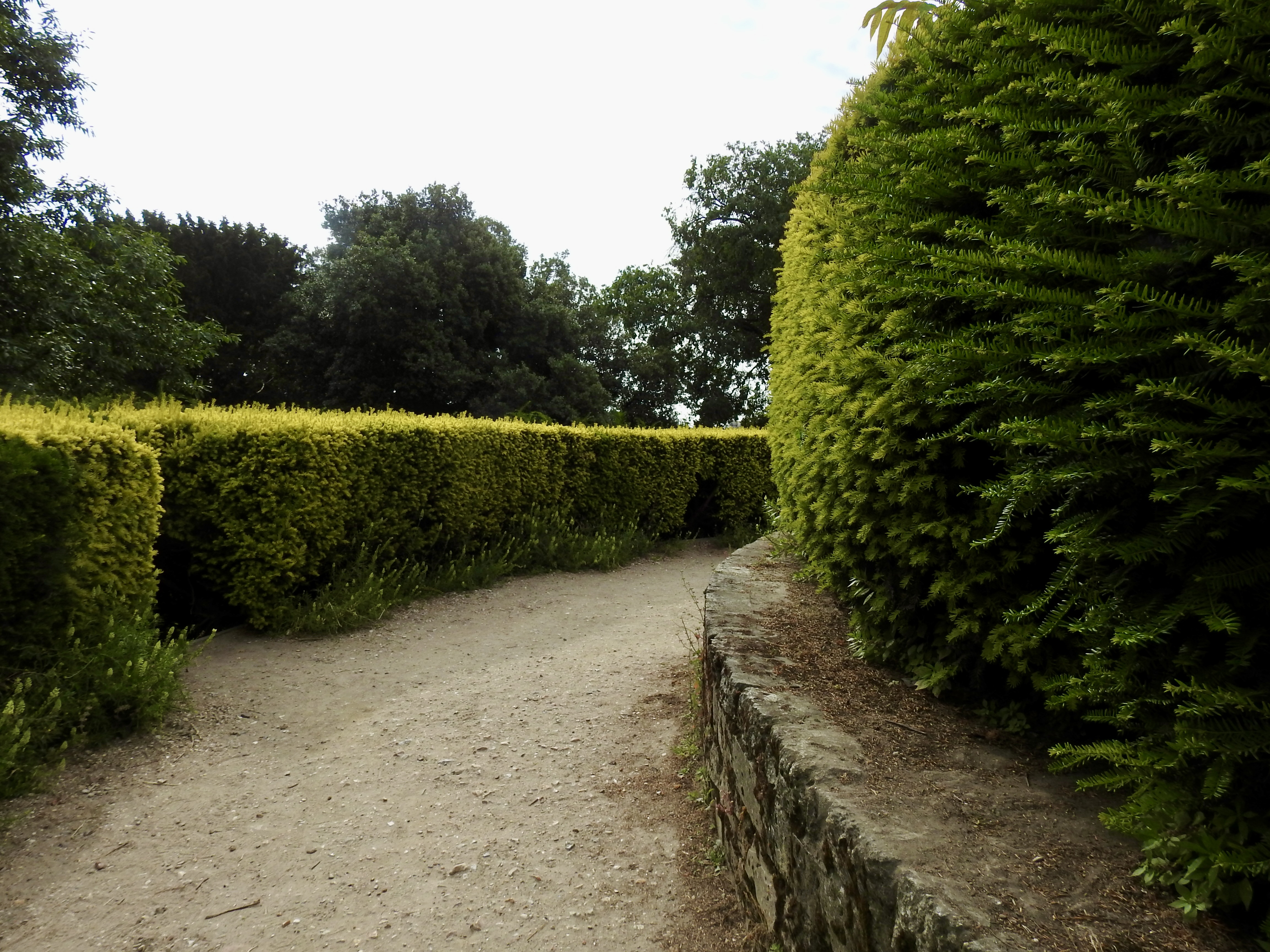
Labyrinth Hill in Paris, within the botanical garden in the Latin Quarter, was designed with this same purpose in mind. The hill is rounded and domed with a spiral path, lined with thick hedges, to the top. It is not a dramatic climb, just a gently meditative one. The spiral trail winds upward through tall greenery, evoking the mystery of an ancient hedge labyrinth. As you walk, each turn gives you a shifting perspective of flowers, trees, Paris rooftops, and sky. Like life, the view evolves as you go.
At the summit, a delicate wrought iron gazebo, the Buffon Gazebo, awaits like the crown on top of a domed head. But this hill is more than just a path. It is a place of contemplation.
The hill and its gazebo are named after Georges-Louis Leclerc, Count Buffon (1707–1788), a French naturalist and philosopher of the Enlightenment. Buffon believed deeply in the power of curiosity and observation. As director of the King’s Garden (now the Garden of Plants – a botanical garden), he helped turn it into a hub of botanical, geological, and zoological learning.
The summit’s Buffon Gazebo, created in the late 18th century with iron from Buffon’s own forges by French architect Edme Verniquet and locksmith Claude-Vincent Millett, is said to be the oldest metallic garden pavilion in Paris. More than ornamental, the gazebo was meant to symbolize human knowledge and alchemy – the medieval practice of transmuting base metals into gold, finding a universal cure for disease, and prolonging life. It incorporates seven classical metals: iron, gold, silver, copper, lead, tin, and mercury – each associated with ancient wisdom and healing. The gazebo’s crown is an armillary sphere, a celestial model once linked to a cosmic chime that rang at noon, but the chime is now lost.
This morning, a woman practiced yoga near the top. Two runners paused before returning to the base level. A couple with a baby stroller stopped to catch their breath and simply be together to admire the view. Briefly, I had the hill to myself. The silence was profound. I felt lighter. Elevated and elated.
That’s what labyrinths do: they don’t change the world, but they change how we feel. When I visit Labyrinth Hill, I let it be more than a walk. I let it work on me. The journey is always different, and always restorative.
Making my peace with the labyrinth of contemplation, I do the following:
- Place a question at the base, before I ascend, and wait to receive the answer or insight when I arrive at the top.
- Breathe in time with my steps because matching breath to movement slows my thoughts from racing and grounds my body.
- Repeat a quiet mantra, sometimes just a word: “release” or “peace” – or a phrase: “let it go.”
- Stop at each turn to notice something new, such as a shape, a different shade of green, a scent, a sound – to build presence.
- Stand or sit in silence in the gazebo, with no phone, no journaling, just allowing stillness to settle in.
***
Rainy Day Healing blogs: “This kind of quiet, honest reflection is exactly what makes Rainy Day Healing such a special space.” Chaz. T., USA


In a world of sensory overload, Tranquility Mapping offers a gentle, creative way to reconnect with peace and calm, and recreate restorative spaces. Whether you’re seeking stillness in a busy home, serenity in a classroom, or relief in a hectic office, this guide gives you the tools to map and reshape your environment to support your well-being. Whether you have a garden, one room or an entire building to work with, this guide helps you transform your everyday spaces into sanctuaries of stillness.
Includes: Tranquility Mapping templates and examples (for home, classroom, school, and office); A Tranquility Toolkit checklist (sound, scent, sight, and texture tools); A teacher’s guide to mapping calm with students; A list of workshop questions and techniques for working with groups; Real-life inspiration based on research on peace and tranquility.
Ideal for: Anyone seeking a sensory-friendly space and a place of quietude; Teachers and educators designing calm corners for students in classrooms and learning spaces; Families, parents, and caregivers wanting to create calm for children, seniors, and all members; Therapists, coaches, and wellness professionals; Human resource personnel, office planners, and office workers reclaiming restorative spaces.
Map your way back to tranquility. Map emotional geography in real life. Feel the benefits of restorative spaces. If you have a notebook, blank paper, pencils, crayons or highlighters, and optional stickers and sticky notes, you can begin. You don’t have to wait for peace to find you. You can find it, design it, and return to it anytime. You can design the tranquility you want to feel.

Leave a Reply