
MAKING MY PEACE … in 2026 with visual journaling
This year, 2026, I have begun visual journaling using a combination of a loosely-based phenology wheel with watercolour paintings and notes.
A phenology wheel is traditionally used to track natural events and cycles, such as flower plantings, bird migrations, weather patterns, daily temperatures, hours of sunlight, animal activity, and so on, across a year. I’ve adapted mine very loosely, to record moods, places, objects, and daily impressions.
When we paint what we see, we slow our nervous system. We notice light, shape, colour, and texture. When we journal, especially visually, we concentrate on what we see, remember, or imagine.
Research consistently demonstrates that creative practices like journaling and art can reduce stress and anxiety, support emotional processing, balance moods, and improve focus. In difficult or uncertain periods of life, this becomes a regulating experience. We may not be able to change the outer world, but we can witness it. And in witnessing, we begin to regain a sense of agency, coherence, and an understanding of ourselves.
I drew a circle template for each month, inspired by traditional phenology wheels, and decided that each day I would paint or sketch something I had seen, something I had done, or something that inspired me. So, my journal is not a productivity log or a perfection project, but a visual journaling practice.
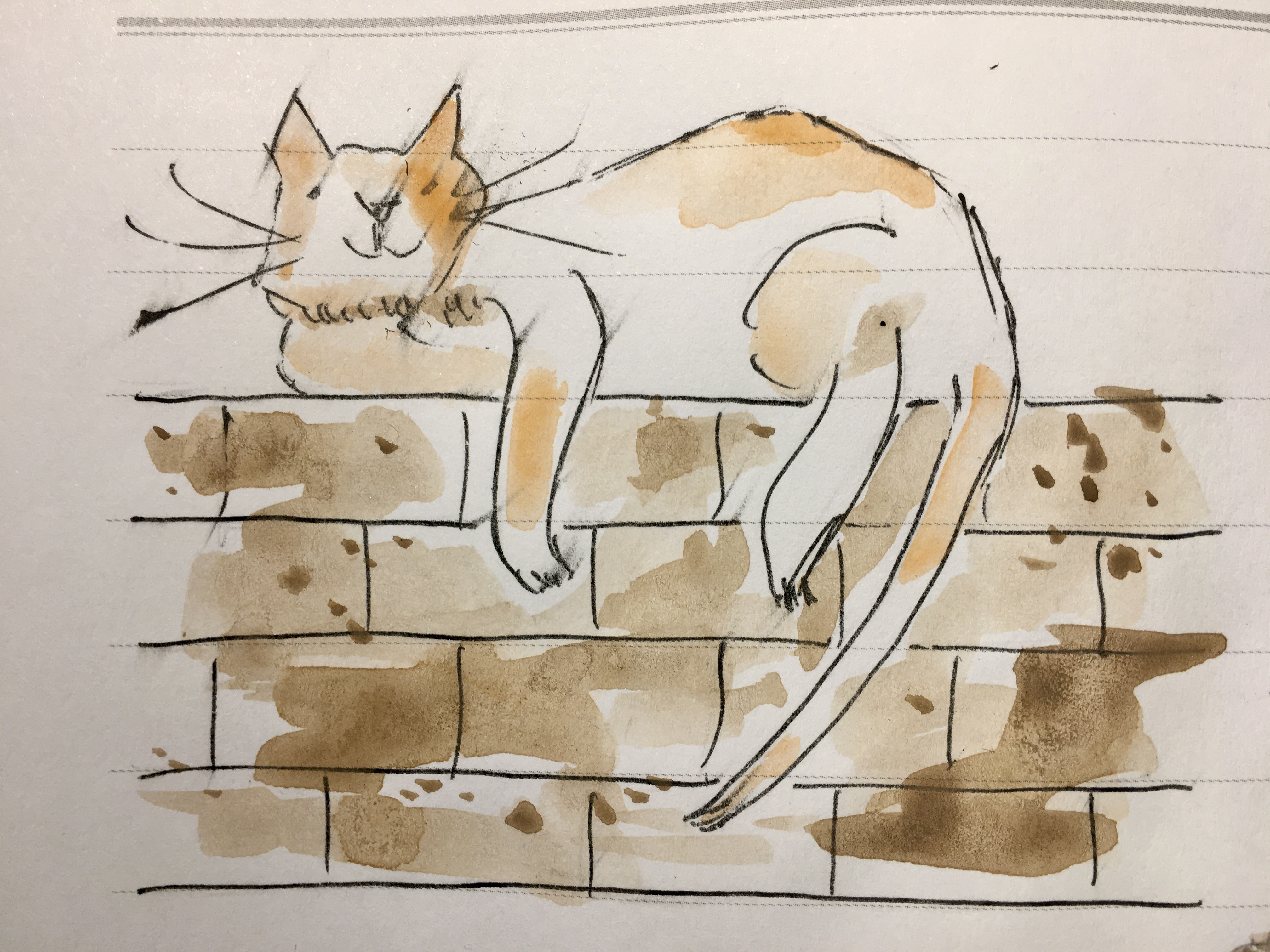
So far, to mid-January, my pages already hold images of a view from a café in Paris, a Sunday breakfast menu, a packet of coffee, a kiosk in a local park, a ginger cat, snowflakes, ancient ruins in North Yorkshire, and a beach scene in Wales. Some of these are painted from real life and some from memory. All of them represent a moment of my day in actuality or in thought.
By pairing a phenology wheel with watercolour journaling, I am creating a rhythm (daily, seasonal, and circular rather than linear) and a visual memory system, as well as a soft accountability to presence, and a growing archive of lived moments.
This combination helps me to stay anchored in the present while watching the year evolve, track emotional and environmental seasons side by side, build creative confidence through regular acts of drawing, and create something beautiful without needing it to be useful or perfect.
By the end of the year, these wheels and the journal pages will become a kind of emotional and sensory map of 2026, showing not just what happened, but how it felt to me.
***
For those who would like to try it, there are no rules in making the kind of phenology wheel that you want, because it is tailored to individual preferences. And you don’t need to be an artist to do visual journaling.
Here is how I made my monthly wheel:
1. Draw a large circle on a page.
2. Add a smaller circle in the centre, leaving a ring between the two.
3. Divide the ring into segments. I chose 32 segments — one for the days of the month (maximum is 31) plus one for the name of the month.
4. Number each segment around the outside edge according to the days of the month (28 days for February or 29 days in a leap year; 30 days for April, June, September, and November; 31 days for January, March, May, July, August, October, and December).
Each day, I filled in the daily segment with a small painting, sketch, pattern, or colour inspired by something from that day. Some people track weather, mood, plants, animals, or energy levels. I’m tracking moments that want to be remembered. At the end of the month, I will fill the inner circle and blank segments with additional watercolour images. In the ten or so blank pages for each month, I draw, sketch, watercolour, and add notes and thoughts.
***
Rainy Day Healing blogs: “This kind of quiet, honest reflection is exactly what makes Rainy Day Healing such a special space.” Chaz. T., USA


In a world of sensory overload, Tranquility Mapping offers a gentle, creative way to reconnect with peace and calm, and recreate restorative spaces. Whether you’re seeking stillness in a busy home, serenity in a classroom, or relief in a hectic office, this guide gives you the tools to map and reshape your environment to support your well-being. Whether you have a garden, one room or an entire building to work with, this guide helps you transform your everyday spaces into sanctuaries of stillness.
Includes: Tranquility Mapping templates and examples (for home, classroom, school, and office); A Tranquility Toolkit checklist (sound, scent, sight, and texture tools); A teacher’s guide to mapping calm with students; A list of workshop questions and techniques for working with groups; Real-life inspiration based on research on peace and tranquility.
Ideal for: Anyone seeking a sensory-friendly space and a place of quietude; Teachers and educators designing calm corners for students in classrooms and learning spaces; Families, parents, and caregivers wanting to create calm for children, seniors, and all members; Therapists, coaches, and wellness professionals; Human resource personnel, office planners, and office workers reclaiming restorative spaces.
Map your way back to tranquility. Map emotional geography in real life. Feel the benefits of restorative spaces. If you have a notebook, blank paper, pencils, crayons or highlighters, and optional stickers and sticky notes, you can begin. You don’t have to wait for peace to find you. You can find it, design it, and return to it anytime. You can design the tranquility you want to feel.

Leave a Reply