
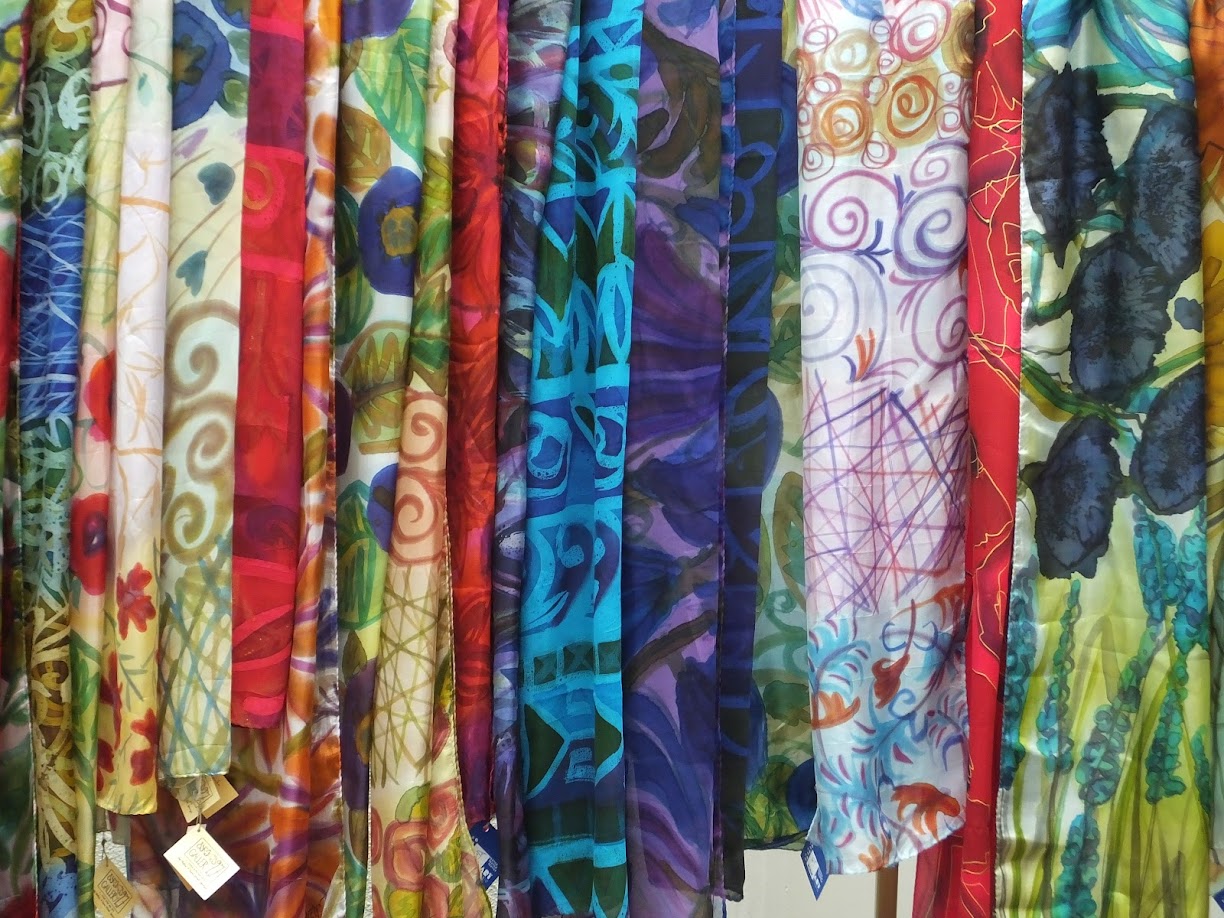
MAKING MY PEACE … with choosing what colour to wear
Some mornings the world outside already seems to have chosen a colour. Grey sky. Grey streets. Grey thoughts. I am wearing a grey sweater. Then something happens. I reach for a blue sweater instead. Or a warm camel scarf and not the black one. And then the day feels different.
Psychologists have long explored the relationship between colour and mood, and while colour is not magic, it does influence how our nervous system responds to the world around us. Colours can energize, calm, focus, or comfort us.
What we wear is therefore more than a practical decision. When we choose colours to wear, we may be helping our mind and body move toward the emotional state we need for the day. Even people who prefer a minimal wardrobe, perhaps wearing mostly black or neutral colours, still make subtle emotional choices between shades and textures.
Different colours are associated with different emotional responses. These responses are partly cultural and partly biological. Here are some commonly observed effects:
Blue is often associated with stability, reflection, and mental calm. Many people find blue clothing helpful on busy or stressful days.
Green reflects the natural world and often promotes feelings of grounding and renewal.
Yellow can stimulate optimism, energy, and curiosity.
Red can increase alertness and energy.
Neutral tones, like grey, beige, white, and black, provide emotional stability and predictability. They can reduce decision fatigue.
Many people plan their clothing the night before. This is efficient, but it raises an interesting question: How can we predict tomorrow’s mood?
The answer is: we often can’t. But we can dress for the emotional tone we want to encourage.
Instead of asking: “What will tomorrow feel like?” try asking: “What might help tomorrow feel a little better?” A calm blue, a camel tone, or a hopeful touch of yellow? Small colour choices can act as gentle psychological cues throughout the day.
Clothing cannot solve every problem, but small rituals can shape our daily routine. Choosing colour consciously is one such ritual, and we may discover that colour becomes a small emotional toolkit. Think of it this way:
“You can’t always control the mood of the day.
But you can choose the colour to help you get through it.”
***
Making my peace with choosing what colour to wear, I experiment with the following:
Exercise 1: My personal mood colour map.
Everyone responds differently to colours. I create my own Mood Colour Map by reflecting on how certain colours make me feel. I draw a simple chart with three columns: Colour / How I Feel Wearing It / When It Helps
For example:
blue / calm and thoughtful / work meetings
green / grounded and relaxed / walks or stay-at-home days
yellow / cheerful / when I’m creative
black / focused and serious / formal settings
Over time you will begin to see patterns in your personal emotional palette.
Exercise 2: The morning mood adjustment.
Before choosing clothes to wear, I pause for a brief emotional check-in. I ask myself:
How do I feel right now?
What does today require from me?
What colour might support that?
For example:
If I have low energy → I might choose energizing tones like red, orange, or warm yellow.
If I need focus → I might choose neutrals.
This is not about fashion trends. It is about emotional alignment.
Exercise 3: The weekly colour experiment.
For one week, I try a colour experiment. Each day, I intentionally choose one colour to support my mood.
For example:
Monday: blue for calm focus
Tuesday: green for balance
Wednesday: yellow for creativity
Thursday: neutral tones for stability
Friday: red or coral for confidence
At the end of the week, I reflect on the following:
Did certain colours influence my energy?
Did I notice differences in my confidence or calmness?
Did others respond differently to me?
This is my colour palette and emotional toolkit for the week.
***
Rainy Day Healing blogs: “This kind of quiet, honest reflection is exactly what makes Rainy Day Healing such a special space.” Chaz. T., USA


In a world of sensory overload, Tranquility Mapping offers a gentle, creative way to reconnect with peace and calm, and recreate restorative spaces. Whether you’re seeking stillness in a busy home, serenity in a classroom, or relief in a hectic office, this guide gives you the tools to map and reshape your environment to support your well-being. Whether you have a garden, one room or an entire building to work with, this guide helps you transform your everyday spaces into sanctuaries of stillness.
Includes: Tranquility Mapping templates and examples (for home, classroom, school, and office); A Tranquility Toolkit checklist (sound, scent, sight, and texture tools); A teacher’s guide to mapping calm with students; A list of workshop questions and techniques for working with groups; Real-life inspiration based on research on peace and tranquility.
Ideal for: Anyone seeking a sensory-friendly space and a place of quietude; Teachers and educators designing calm corners for students in classrooms and learning spaces; Families, parents, and caregivers wanting to create calm for children, seniors, and all members; Therapists, coaches, and wellness professionals; Human resource personnel, office planners, and office workers reclaiming restorative spaces.
Map your way back to tranquility. Map emotional geography in real life. Feel the benefits of restorative spaces. If you have a notebook, blank paper, pencils, crayons or highlighters, and optional stickers and sticky notes, you can begin. You don’t have to wait for peace to find you. You can find it, design it, and return to it anytime. You can design the tranquility you want to feel.

Leave a Reply